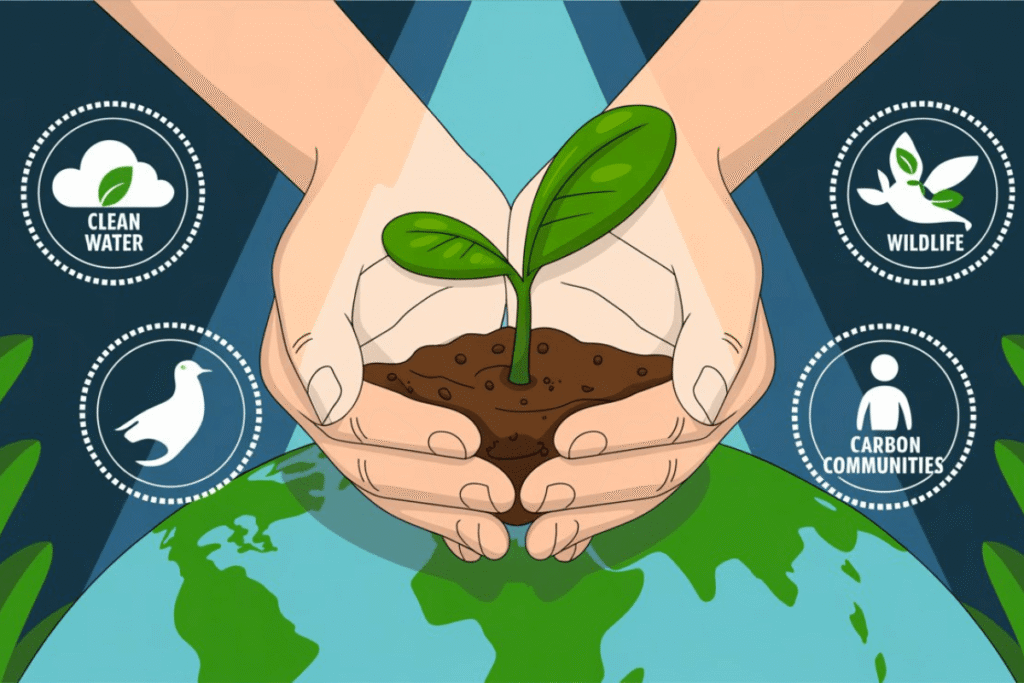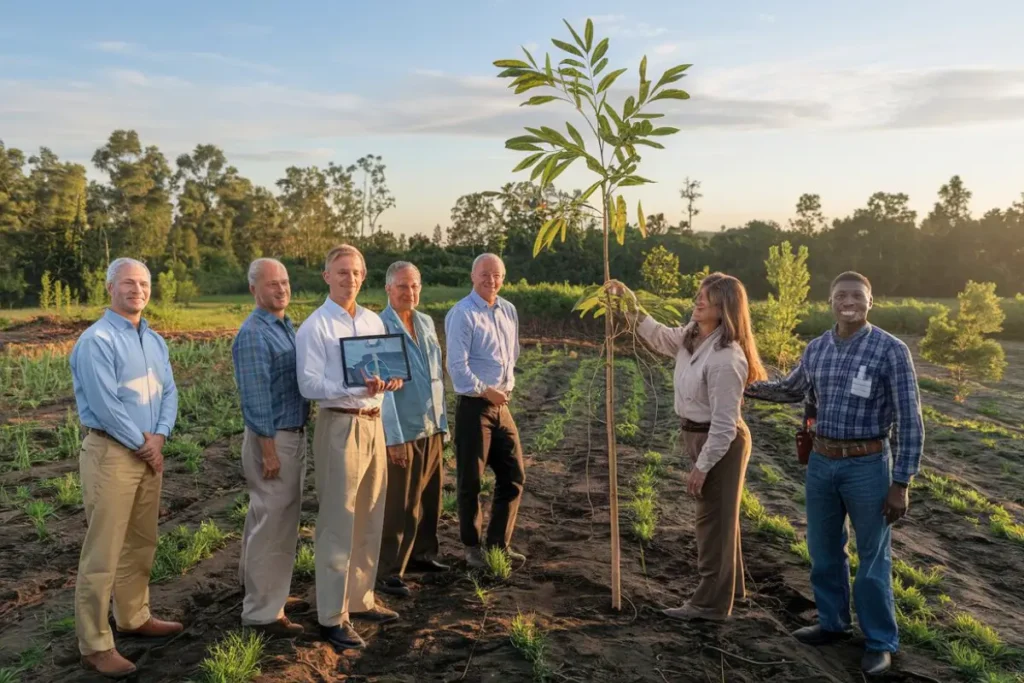

Reforestation meaning is the practice of restoring forested land that has been lost to deforestation, wildfires, or other disturbances. In 2025, this process represents a critical global effort to combat climate change, preserve biodiversity, and build sustainable ecosystems.
Reforestation involves restoring lost forests by planting trees in areas impacted by wildfires, logging, or agriculture, helping nature flourish once again.
In 2025, this cause is more urgent than ever as our planet grapples with climate change and biodiversity loss. At PlanetTools, we see reforestation as a powerful path to a sustainable future—and you can be part of it. This article explores what reforestation means, why it matters, and how it’s transforming landscapes worldwide.
Table of Contents
What is Reforestation? Understanding the Basics
Reforestation involves replanting trees in areas where forests once grew but were lost. This loss can happen through natural events like wildfires or human activities like logging. The goal is to restore the entire ecosystem, not just plant trees. This means rebuilding wildlife habitats and improving soil health.
The approach varies depending on regional needs. For example, in Canada’s boreal forests, reforestation often encourages natural regeneration by protecting local seed sources. In contrast, post-wildfire efforts in Australia include planting native seedlings to support forest restoration.
Reforestation is about more than just planting trees—it’s about restoring ecosystems, rebuilding habitats, improving soil quality, and supporting nature’s balance. PlanetTools is committed to this mission by showcasing the technologies and platforms that make it possible.
How Does Reforestation Differ from Afforestation?

Recognizing the difference between reforestation and afforestation is key to fully understanding the broader goals of forest restoration efforts.
Restoring forests involves planting trees in regions where natural woodland once existed but was removed. For instance, projects in India’s Western Ghats rebuild native forest cover after years of deforestation.
Afforestation involves planting trees in regions that have never naturally supported forest growth. An example would be tree planting in the Sahara Desert to prevent desertification.
While both strategies are crucial, reforestation addresses the direct loss of existing forests. In 2025, it remains a top priority due to the increasing rate of forest degradation.
Recommended read: Afforestation vs. Reforestation – Key Differences and Use Cases.
Why Reforestation Matters: Its Role in Healing the Environment

Restoring ecosystems is critical when human or environmental impacts cause damage. It forms a foundational part of forest restoration strategies that preserve the planet’s health.
One of its key contributions is biodiversity conservation. Reforested areas become safe habitats for wildlife. In Brazil’s Amazon, reforestation efforts provide safe zones for species such as jaguars and macaws, helping ensure their survival.
Reforestation also improves land and water stability. Tree roots help prevent soil erosion in flood-prone regions like the United Kingdom and filter freshwater systems in areas such as France’s Rhône Valley.
These environmental advantages significantly influence clean water access, sustainable farming, and overall human health.
Explore more: Global Forest Watch – Open Source Forest Monitoring.
Key Benefits of Reforestation for the Planet and People
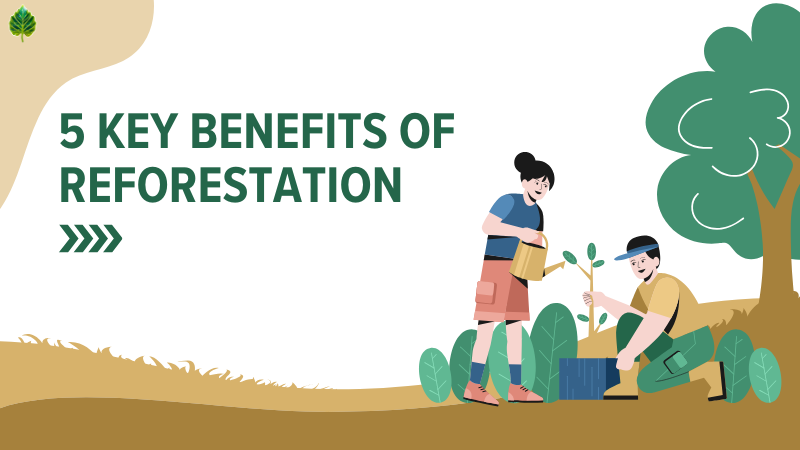
Reforestation delivers long-term value to the environment and the people who depend on it. These are a few of the most important benefits reforestation offers:
1. Combats Climate Change
A single mature tree absorbs up to 22 kg of CO₂ every year (IPCC Special Report on Climate Change and Land). Globally, forests remove around 2.6 billion metric tons of CO₂ from the atmosphere annually (NASA Earth Observatory).
Source: IPCC Special Report on Climate Change and Land.
Forests absorb approximately 2.6 billion metric tons of CO₂ annually according to NASA Earth Observatory
2. Preserves Biodiversity
Forests shelter nearly 80% of all land-based species. Reforestation actively restores habitats for endangered animals, especially in critical hotspots like the Amazon rainforest and Southeast Asia. Despite these efforts, the world has lost 420 million hectares of forest since 1990 (UN FAO).
3. Improves Air and Water Quality
Trees Clean Air and Water While Cooling Cities Trees filter pollutants from the air and purify water naturally. In Australian cities, strategic urban tree planting has reduced air temperatures by as much as 8°C, which improves public health and cuts energy demand for cooling.
4. Supports Livelihoods
Reforestation Creates Jobs and Sustains Communities More than 1.6 billion people worldwide rely on forests for food, shelter, medicine, and income. In places like Madagascar, reforestation projects employ local people and generate lasting, sustainable livelihoods.
5. Reduces Environmental Risks
Reforestation Prevents Disasters New and restored forests stabilize soil, dramatically reducing the risk of floods, landslides, and erosion. In the U.S. Pacific Northwest, reforestation initiatives now shield entire communities from seasonal flooding and mudslides.
Get involved: Organizations like One Tree Planted make it easy for anyone to support global reforestation efforts.
How Reforestation Actually Works Around the World
Reforestation goes far beyond planting saplings. Teams follow science-driven processes to ensure trees survive and thrive for decades. Organizations like One Tree Planted, Eden Reforestation Projects, and national forestry agencies work globally to ensure long-term impact.
Experts first assess degraded land to understand the damage and choose the best restoration approach. Near Australia’s Great Barrier Reef, communities protect remaining native seeds and encourage natural forest regrowth.
In wildfire-scarred regions of the United States, crews remove invasive species, enrich the soil, and plant fast-growing native trees. Sometimes they even use controlled burns to lower future fire risk.
In France’s Landes region, foresters select resilient species that withstand floods and high winds, building forests that endure extreme weather.
Every tree planted today actively fights climate change, restores wildlife habitat, and protects communities for generations to come.
Explore website used in reforestation:
FAO – State of the World’s Forests.
Pachama
The Nature Conservancy – Reforestation Guide
Frequently Asked Questions About Reforestation
What is the meaning of reforestation in 2025?
Reforestation in 2025 means restoring forests lost to wildfires, deforestation, or agriculture using modern tools like drones, AI, and community-driven planting projects.
Why is reforestation more urgent now?
Rising global temperatures, biodiversity loss, and extreme weather events make reforestation a critical solution for carbon capture and ecosystem stability.
How does reforestation support biodiversity?
Reforestation restores lost habitats and strengthens wildlife corridors for endangered species. In tropical regions, it brings back pollinators and native birds critical to ecosystem balance. Initiatives such as Treedom’s tree planting platform let individuals sponsor trees and track their environmental impact.
How does reforestation help fight climate change?
Trees actively absorb carbon dioxide, a major greenhouse gas that drives climate change. Large-scale reforestation projects are among the fastest and most cost-effective ways to slow global warming.
How does reforestation benefit local communities?
Communities gain green jobs, better soil for farming, and cleaner water. In many regions, reforestation also supports eco-tourism and long-term economic resilience.
What technologies are transforming reforestation?
AI mapping, satellite monitoring, and drones dramatically speed up tree-planting operations worldwide. For example, AirSeed Technologies uses drones to plant thousands of seed pods daily in remote landscapes.
Can individuals contribute to global reforestation?
Yes. You can sponsor trees online, join volunteer planting events, or support trusted platforms like Treedom, where every tree planted is trackable.
How do carbon offset programs connect to reforestation?
Carbon offset platforms let people and companies balance emissions by funding verified tree-planting projects. Tools like NCX help landowners monetize reforestation through carbon markets.
What are the biggest challenges in reforestation?
Challenges include poor seedling survival rates, invasive species, land-use conflicts, and lack of funding. Technology and policy support are helping overcome these barriers.
Conclusion: Reforestation is Our Path Forward
Restoring forests is among the most impactful strategies for addressing today’s environmental challenges. It addresses climate change, supports wildlife, restores ecosystems, and uplifts communities worldwide.
At PlanetTools, we spotlight the cutting-edge tools, platforms, and strategies that drive global reforestation efforts forward.
Whether you’re in the US, UK, Canada, or India, or another nature-loved and developed country, you can make an impact—support reforestation projects, explore reforestation technologies, or share these insights with your network.
Let’s make 2025 the year we bring forests back to life. When we collaborate with purpose, we build a healthier, more resilient, and truly sustainable planet.