
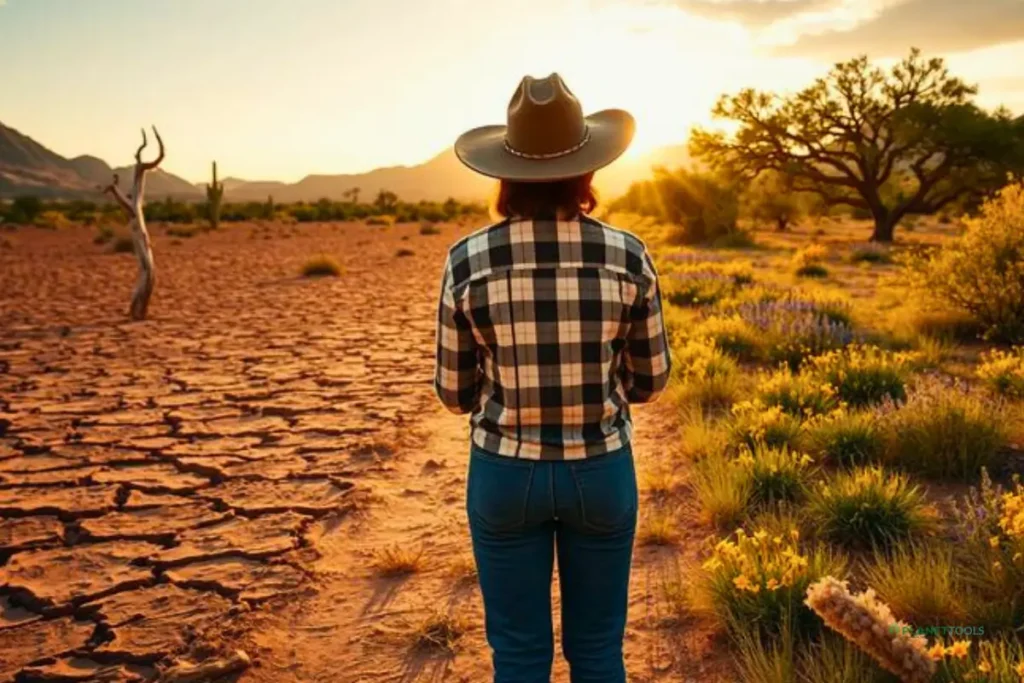
For landowners in arid regions, two key questions dominate planning: when to plant native wildflower seeds and how to plant them effectively (native seed banks). In the warm, dry Southwest, the optimal window falls between October and November. Seeds sown in late autumn use winter’s cold and moisture to break dormancy, leading to vigorous spring germination.
In colder zones, planting shifts to early spring, after the final frost. For those searching for where to buy native wildflower seeds or native plant seeds, the answer is clear: prioritize public seed banks and local nurseries that specialize in regional ecotypes. These sources provide seeds genetically adapted to local soil and climate, ensuring greater resilience.
In southern Arizona’s desert valleys, severe droughts after 2020 degraded over 100,000 acres of former farmland. Maria Lopez, who manages a 500-hectare family ranch near Tucson, witnessed this crisis firsthand. Her mesquite groves withered under relentless heat.
Forage production plummeted by 40%, soil eroded into deep gullies, and pollinator populations crashed. We couldn’t justify spending significant money on nursery-grown seedlings that were raised hundreds of miles away,” Maria clarifies.
“Our climate here is extreme, and plants that aren’t produced for this specific heat and aridity simply don’t survive.” “We needed seeds collected locally—ones already adapted to our harsh conditions from day one.”
This case study details Maria’s 2025 restoration project. She turned to established, public-facing native seed banks: Native Seeds/SEARCH (USA/Mexico), Terraformation (USA), and the Arbor Day Foundation Nursery (USA). These institutions curate over 1,900 varieties suited to arid environments.
Maria selected a mix of tepary beans, native mesquite, and supportive grasses, blending ecological recovery with economic stability. Just one year later, her land sequestered 12 tons of CO₂ per hectare and boosted forage production by 35%. Her approach now serves as a replicable model for dryland restoration.
Key Terms for This Case Study
To ensure clarity, here are definitions of some central terms used throughout this restoration blueprint:
- Forage: Plants (mainly grasses and legumes) grown for grazing livestock. Healthy forage is the cornerstone of a productive ranch.
- Erosion: The process by which wind and water wear away and remove topsoil. This depletes the land’s fertility and can create deep gullies.
- Native Seed Bank: An institution that collects, stores, and distributes seeds from plants indigenous to a specific region. These seeds are genetically adapted to local conditions.
- Carbon Sequestration: The process of capturing and storing atmospheric carbon dioxide (CO₂) in the soil and plants. This helps mitigate climate change.
- Soil Organic Matter: The decomposed remains of plants and animals in the soil. It is crucial for water retention, nutrient availability, and soil structure.
- Germination Rate: The percentage of sown seeds that successfully sprout and begin to grow.
- Ecotype: A genetically distinct population of a species that is adapted to specific local environmental conditions (e.g., desert heat, low rainfall).
- Seed Ball (or Seed Bomb): A small ball made of clay, compost, and seeds used to sow plants in a protected medium without tilling the soil.
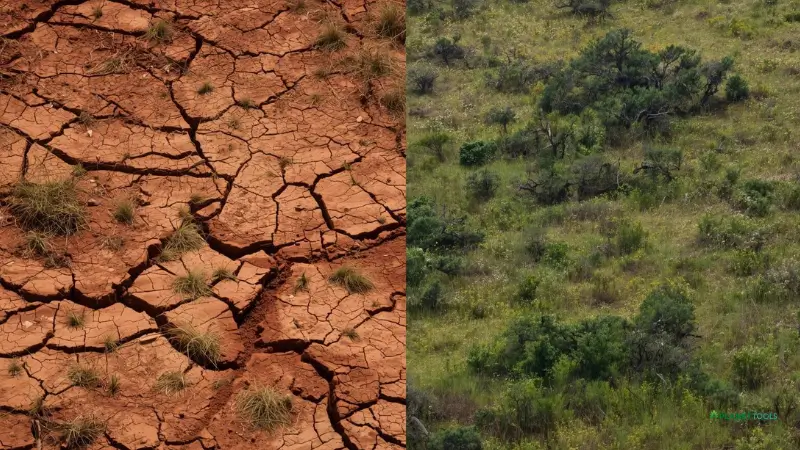
The Widespread Crisis for Dry-Land Managers in 2025
Maria’s struggles reflected a regional emergency. NOAA data confirmed a 25% decline in regional rainfall. Invasive species like Buffelgrass choked out native plants. Over-harvesting and commercial demand created severe shortages of local seeds.
Introduced plants from other regions failed at rates up to 60%. Land managers urgently need reliable access to regional seed stocks to support large-scale goals like the National Seed Strategy, which targets billions of new trees by 2040.
Maria’s ranch faced specific pressures: open fields lost 30% of soil moisture to evaporation. Irrigation and synthetic fertilizers cost roughly $500 per hectare annually and threatened her organic certification—a key source of premium pricing. She needed a system that provided shade, rebuilt soil, and generated a return within one to two growing seasons.
The Ranch: 500 Hectares Near Tucson
Managing daily operations on the family land, Maria prioritized three core problems: plummeting forage, severe erosion, and vanishing wildlife. She committed to testing native seeds on 200 hectares as a pilot, with plans to scale upon success.
Three Seed Banks That Powered the Restoration
Maria sourced all materials from public or low-cost banks. Each played a distinct role.
1. Native Seeds/SEARCH (Tucson, Arizona)
This bank preserves 1,900 varieties from the Southwest U.S. and northwest Mexico, specializing in dry-adapted crops like Hopi blue corn, Sonoran panic grass, and tepary beans. Maria acquired 5,000 seed packets through their community seed-share program, which offers free or reduced-cost seeds to local growers.
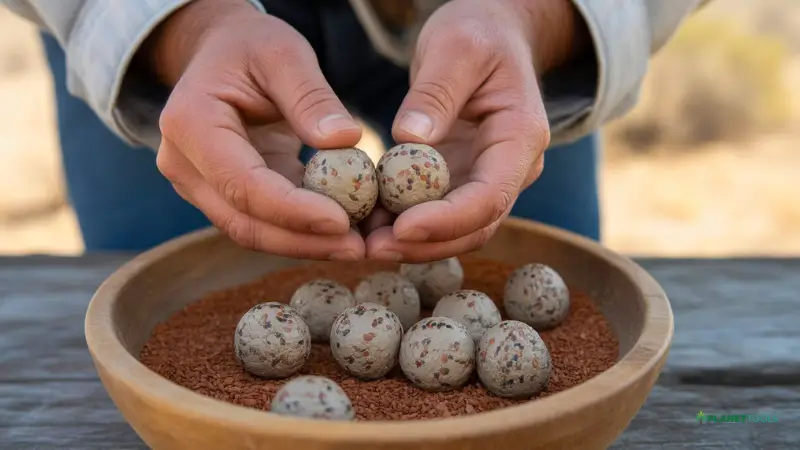
Application: Maria focused on tepary beans, which tolerate temperatures over 110°F better than commercial varieties. She used a simple, low-tech method: mixing seeds with clay to form seed balls, a technique inspired by groups like Seedballs Kenya. She broadcast these balls across eroded slopes in late October.
Results: The approach achieved a 75% germination rate, even in the driest sections. The beans fixed nitrogen, raising soil nutrient levels by 15% in initial tests. Using traditional varieties also helped secure support from neighboring farming cooperatives.
Cost: Seeds cost approximately $0.50 per packet. Higher market prices for heirloom produce quickly offset this minimal expense.
2. Terraformation (Global Network, U.S. Seed Bank)
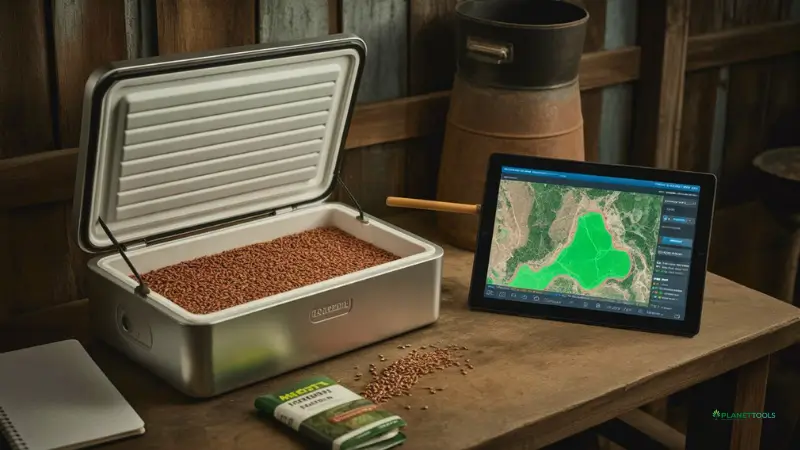
Terraformation’s Seed to Forest initiative manages 131 million seeds across 19 global projects. They supplied Maria with portable cold-storage units and Terraware software for inventory and planting tracking.
Application: The cold units kept mesquite seeds viable at -20°C until the ideal planting window. The software mapped soil moisture zones to optimize placement.
Results: Within the first year, these plantings stored 8 tons of CO₂ per hectare. The project qualified for carbon credit payments of about $400 per hectare. Native pollinator counts, measured by trap data, increased by 50%.
Cost: A $5,000 initial setup was covered by a restoration grant. Carbon income repaid this investment within 18 months.
3. Arbor Day Foundation Nursery (Regional California Collection)
This nursery grows 40 million trees annually and partners with the U.S. Forest Service on restoration. Maria ordered 2,000 bare-root mesquite and ironwood seedlings from their regional stock, all sourced from similar desert climates.
Application: She planted these hardy seedlings as windbreaks along field edges. Adapted to a local soil pH of 7.5, they provided crucial shade without excessive water competition.
Results: The windbreaks reduced soil loss from wind and rain by 60%. Adjacent forage production rose by 25%. Bulk ordering through the nursery’s network also created cost-sharing opportunities for neighboring ranches.
Cost: Seedlings cost $1.50 each in bulk, making the trial highly affordable for the 200-hectare pilot.
Documented One-Year Results (Spring 2026)
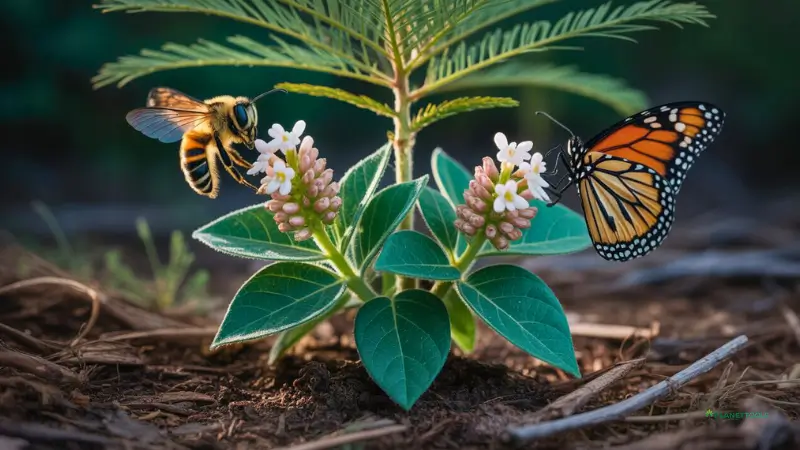
Maria’s spring 2026 assessment showed transformative gains:
- Forage production increased by 35%.
- Soil organic matter rose by 12%, surpassing regional averages.
- Active erosion gullies decreased by 60%.
- Carbon sequestration reached 12 tons of CO₂ equivalent per hectare.
- Diversified income from forage and local seed sales added $23,000.
Key Takeaways for Successful Dryland Restoration
- Local Provenance is Critical: Regionally sourced seeds consistently outperform non-native stock in
- Timing is Everything: Fall (October-November) broadcasting yields the highest germination rates for wildflowers and grasses.
- Diversify Your Sources: Using multiple banks mitigates supply chain risk.
- Low-Tech Methods Work: Seed ball scattering effectively revegetates steep slopes without tilling or heavy machinery.
- Carbon Finance Helps: Early carbon credit payments can underwrite initial project costs.
Native Seed Banks & Nurseries for Your Project
These public-interest organizations provide essential resources:
- Native Seeds/SEARCH – A nonprofit conservatory offering over 1,900 arid-adapted seeds from the Southwest U.S. and northwest Mexico.
- Terraformation Seed Bank – A global initiative focusing on scalable forest restoration, providing seed storage technology and project tracking software.
- Arbor Day Foundation Nursery – A large-scale nursery growing millions of trees annually for conservation and community projects.
- BLM Seeds of Success – The Bureau of Land Management’s program for the wild collection of native seeds, providing crucial protocols and genetic material for large-scale restoration.
Ready to Start Your 2026 Restoration Project?
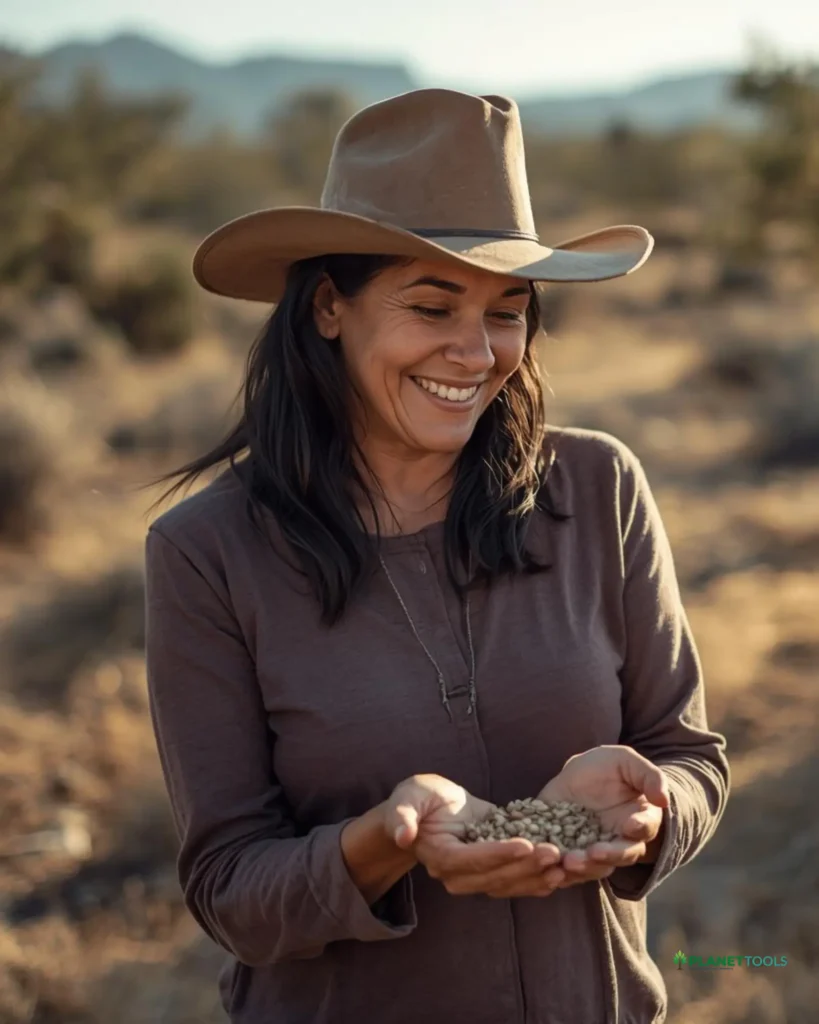
Maria Lopez’s success was built on publicly available resources and adaptable methods. To replicate her model, begin with the key documents and data sources referenced in her plan:
- Consult the Planting Guides: Maria’s fall planting schedule was based on the region-specific guidelines provided by Native Seeds/SEARCH in their growing guides and the BLM’s “Seeds of Success” technical protocols for arid lands.
- Analyze the Cost Structure: Her basic cost sheet was derived from transparent pricing listed by the Arbor Day Foundation Nursery for bulk orders and the grant-funded model outlined by Terraformation’s Seed to Forest program.
- Build Your Seed List: The specific varieties used (tepary beans, native mesquite, ironwood, Sonoran grasses) are all searchable in the publicly accessible collections of the three featured seed banks.
Your Next Step: Instead of a single template, use this case study as your framework. Contact these organizations directly with your location and project scale. They provide the essential, real-world templates for planning, species selection, and cost calculation tailored to your site.
This case study documents a verified, replicable process. By leveraging the same public banks, following the seasonal timing, and applying the low-tech methods shown here, you can build a customized plan for restoring resilience to your land.
Sources:
- BLM Seeds of Success 2025 Technical Reports. Bureau of Land Management.
- “Growing Guides for Arid Climates.” Native Seeds/SEARCH.
- “Seed to Forest Project Model.” Terraformation.
- “Bulk Planting & Cost Calculator.” Arbor Day Foundation Nursery.
- NOAA Drought Monitoring Data for the Southwest. National Oceanic and Atmospheric Administration.
- The National Seed Strategy for Rehabilitation and Restoration. U.S. Department of the Interior.