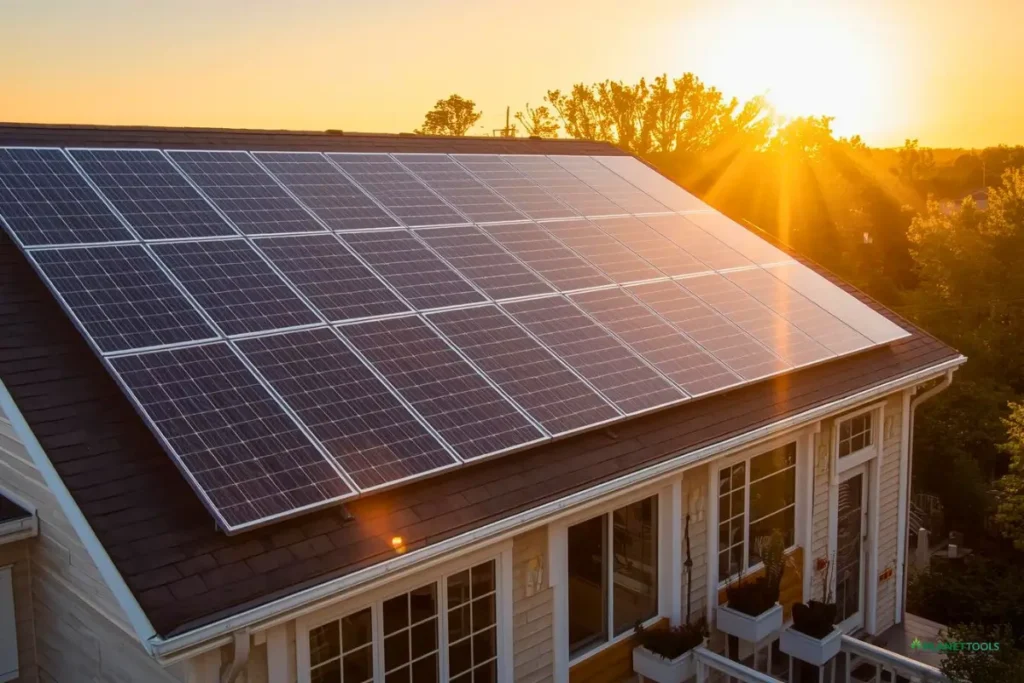
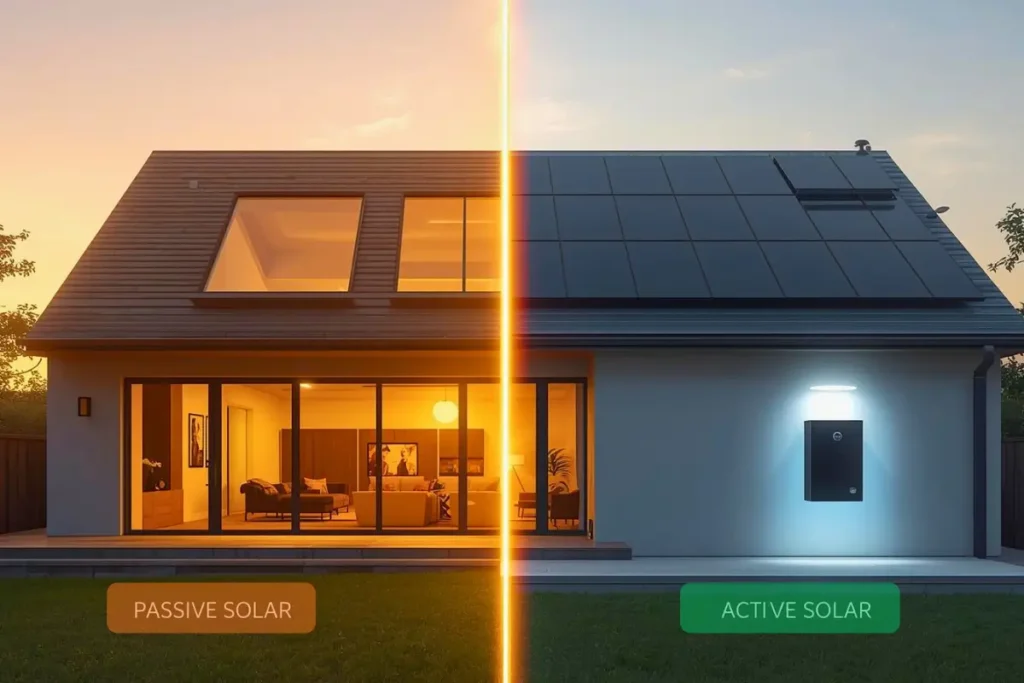
Every hour, enough sunlight reaches the Earth to power our entire planet for a year. Yet most homeowners don’t realize they can harness this incredible resource in two completely different ways.
Understanding the difference between Passive and Active Solar Energy represents one of the most fundamental decisions in sustainable living—one that can determine whether you simply reduce your energy bills or potentially eliminate them altogether.
For example, Imagine two neighbors living in similar homes. One spends thousands on solar panels, while the other achieves similar energy savings simply through smarter home design. This isn’t a theoretical scenario—it’s the real-world difference between active and passive solar strategies. Active solar involves adding technology to capture the sun’s power, while passive solar works with architecture and natural processes to dramatically reduce energy needs.
Understanding this distinction is crucial because it affects everything from your upfront costs and maintenance requirements to your long-term energy independence.
Whether you’re building new, renovating, or simply looking to save on utility bills, knowing which approach fits your situation can mean the difference between wasting thousands on the wrong solution and achieving genuine energy efficiency.
This guide will break down exactly how these systems differ, where they work best, and how to determine which approach—or combination of approaches—can deliver the best results for your specific needs and budget.
Table of Contents
What is Passive Solar Energy?
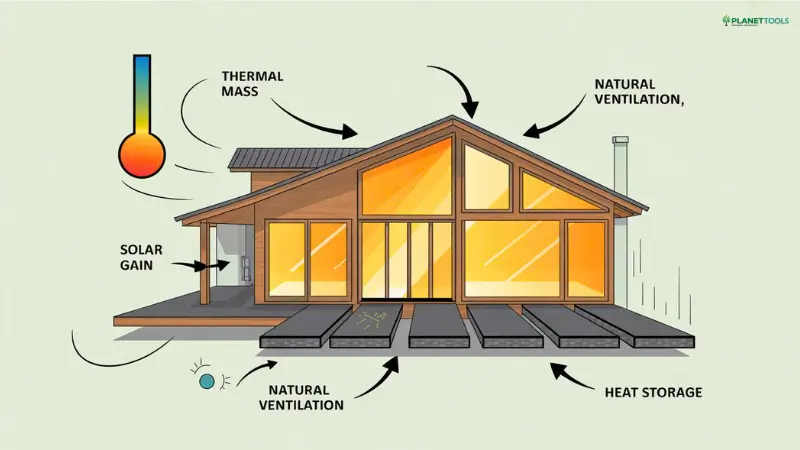
Passive solar energy utilizes building design and natural materials to capture and distribute thermal energy without mechanical systems.
It works through architectural elements that respond to natural climate patterns. These strategies are based on fundamental passive solar design principles that have been proven effective.
Passive solar represents the most basic application of the fundamental concepts of solar energy, using design rather than technology to harness the sun’s power.
Key characteristics of passive solar systems include:
- Strategic building orientation to maximize sun exposure
- Thermal mass materials like concrete or brick that store heat
- Proper window placement and sizing for natural heating and lighting
- Natural ventilation designs that promote airflow
- Insulation strategies that minimize energy loss
These systems require no moving parts and operate automatically once implemented.
What is Active Solar Energy?
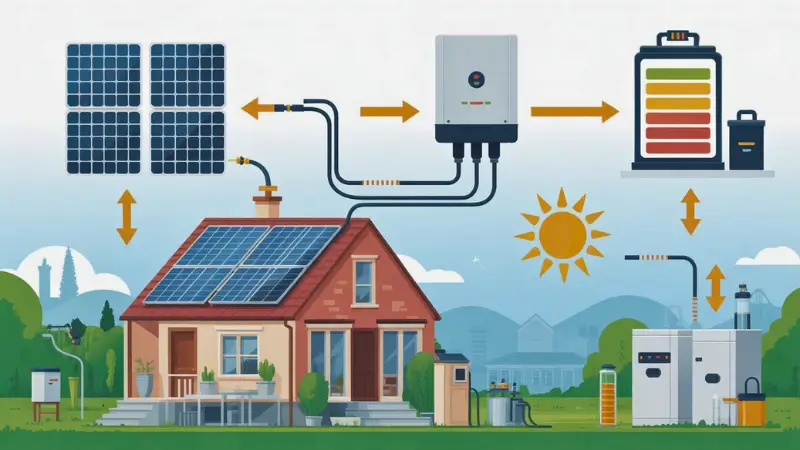
Active solar systems use technology that continues to evolve through ongoing solar energy research and development. These systems use mechanical and electrical components to generate usable power.
Common active solar systems feature:
- Solar photovoltaic panels that convert sunlight to electricity
- Solar thermal collectors for water heating
- Pumps, fans, and controllers that manage energy distribution
- Monitoring systems that track performance
- Storage solutions like batteries for energy retention
Unlike passive systems, active solar requires regular maintenance and operational oversight.
Understanding the Difference Between Passive and Active Solar Energy
The fundamental difference between passive and active solar energy lies in their operational approach and technological requirements.
Key Differences Between Passive and Active Solar Energy
The efficiency metrics and technological distinctions shown in our comparison align with established solar energy performance standards and best practices for system selection.
| Feature | Passive Solar Energy | Active Solar Energy |
|---|---|---|
| Technology | Building design & materials | Mechanical & electrical systems |
| Components | Windows, walls, floors, insulation | Panels, pumps, controllers, batteries |
| Energy Output | Heat management & natural lighting | Electricity & heated water |
| Installation | During construction only | Any time (new or existing buildings) |
| Maintenance | Minimal to none | Regular cleaning & system checks |
| Cost | Lower (built into construction) | Higher upfront investment |
| Best For | New construction projects | Energy generation in existing homes |
Passive and Active Solar Energy Systems in Practice
Various passive and active solar energy systems serve different purposes in residential and commercial settings.
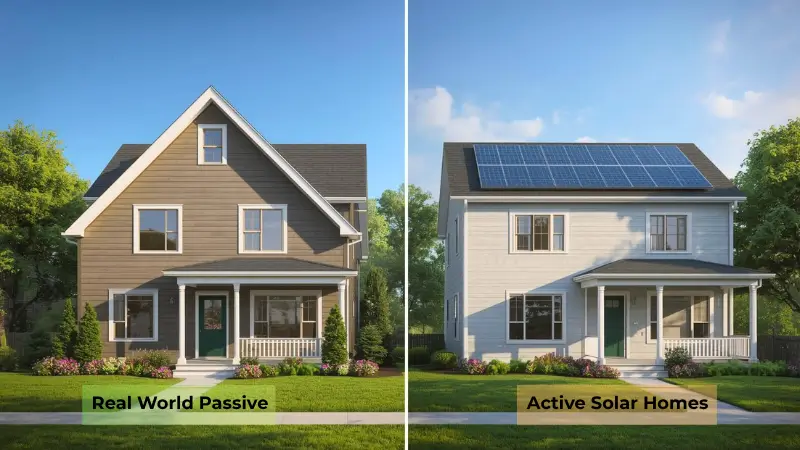
Common Passive Applications:
- Direct gain systems using south-facing windows
- Thermal storage walls (Trombe walls)
- Sunspaces and solar greenhouses
- Natural cooling through stack ventilation
Typical Active Installations:
- Rooftop photovoltaic arrays
- Solar water heating systems
- Solar-powered ventilation
- Grid-tied solar systems with net metering
Who Uses Solar Energy Today?
Understanding who uses solar energy helps illustrate the practical applications of both approaches.
Passive Solar Users:
- Architects and builders incorporating sustainable design
- Homeowners planning new construction
- Commercial developers seeking LEED certification
- Agricultural operations using passive solar greenhouses
Active Solar Adopters:
- Residential homeowners reducing electricity costs
- Businesses lowering operational expenses
- Utilities developing large-scale solar farms
- Remote communities achieving energy independence
Key Distinctions Between Both Approaches
The essential difference between passive and active solar energy becomes clear when examining their operational characteristics:
Resource Requirements:
Passive systems demand careful planning and appropriate materials during construction. Active systems require significant equipment investment and technical installation.
Operational Costs:
Passive designs incur minimal ongoing expenses, while active systems need regular maintenance and potential component replacements.
Suitability Factors:
Passive solutions work best in new construction with favorable site conditions. Active systems can be adapted to various existing structures and locations.
Making Informed Solar Choices
Understanding the difference between passive and active solar energy enables better decision-making for energy solutions. For a comprehensive look at how these technologies fit into the broader landscape, you can explore various renewable energy technologies.
Both approaches offer distinct advantages depending on your specific needs, budget, and circumstances.
Passive systems provide elegant, low-maintenance solutions through smart design, while active systems deliver measurable energy production through advanced technology.
Many modern projects successfully combine both methods for optimal energy efficiency.
The choice between passive and active solar energy depends on your project requirements, available resources, and sustainability goals. By recognizing their complementary strengths, you can select the most appropriate solution for your situation.
Frequently Ask Questions About Passive and Active Solar Energy
What is passive solar energy?
Uses building design (e.g., windows, walls, orientation) to naturally collect, store, and distribute solar heat—no mechanical devices needed .
Key difference between passive and active solar?
Passive relies on architecture; active uses technology (pumps, fans, inverters) to harness solar energy.
Do passive solar systems need maintenance?
Virtually none—since they use no moving parts or external power.
Which is more efficient: passive or active?
Active systems typically yield higher energy output per area, but passive has zero operating costs and zero emissions.
Can homes use both passive and active solar?
Yes! Smart designs combine south-facing windows (passive) with rooftop PV panels (active) for maximum efficiency and comfort.
Is passive solar only for heating?
No—it also aids cooling via shading, ventilation, and thermal mass to regulate temperatures year-round.
Do active solar systems work on cloudy days?
Yes, though output drops; modern PV panels still generate 10–25% of rated power under overcast skies.
Which is more cost-effective: passive or active solar?
Passive solar typically offers better long-term value since it has no moving parts and requires minimal maintenance. However, the most cost-effective approach often combines both – using passive design to reduce energy needs first, then adding active systems to meet remaining demand.
How much maintenance do active solar systems require?
Active solar systems need minimal maintenance – primarily occasional cleaning and annual inspections. Most quality systems have no moving parts, and many installers offer monitoring services to alert you to any performance issues.